

Automated Visual Inspection
Parenteral drug products are required to be 100% visually inspected. As each product and its packaging define their specific inspection task, standardized inspection setups may lead to a high level of false rejects and underperforming visual inspection. A highly customized solution, in contrast, provides the opportunity to significantly improve detection rates and to reduce false reject rates.
High-speed AVI for parenterals
VISION CAV
The modular automated visual inspection platform VISION CAV is designed for a customized, fully-automated inspection of particles and cosmetic defects of vials with liquid or lyophilized products.
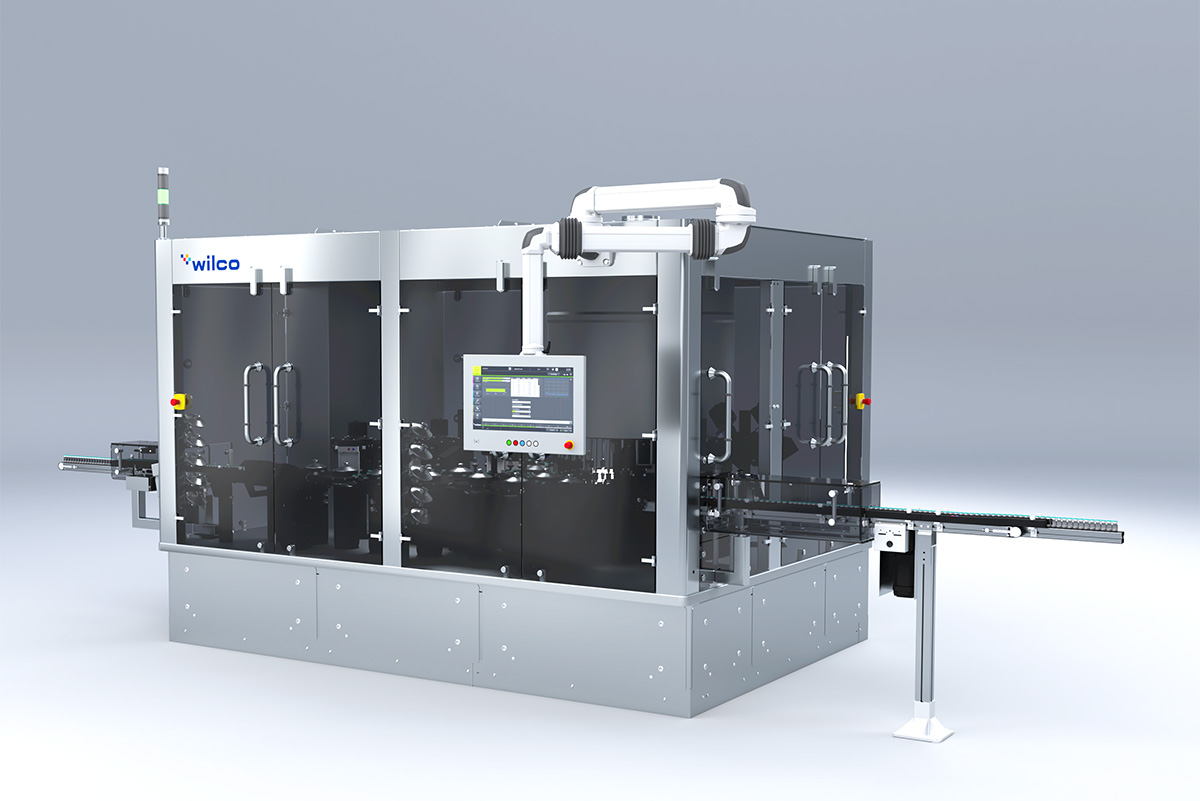
Modular Setup
Depending on the inspection tasks, the VISION CAV can be equipped with 1 to 3 modular inspection stations.
Static optical path OptiX
Maximum inspection process reliability due to reduction of vibrations within the inspection system. No operator adjustments during format change on cameras or light are required and therewith prevents miss alignments.
Customized inspection setup
The selection of inspection algorithms is project specific and therefore reaching maximum detection rates. The inspection platform provides scalable processing units and allows simple upgrade to new inspection tasks.
Machine design acc. GMP
The inspection platform is designed for simple cleaning and a fast overall changeover between formats. Additionally critical components such as cameras are protected from dust and environmental conditions.
The vision machine combines solid and proven mechanical engineering according to GMP standards with the latest digital inspection technology.
Modular Configuration
Depending on whether only liquid or also lyophilized pharmaceuticals are to be inspected, up to three different automated visual inspection modules are integrated accordingly.
Thanks to the flexible, modular design, it is possible to supplement the visual inspection with additional CCIT and/or PAT technologies such as differential pressure, headspace analysis, and near-infrared spectroscopy. This results in a multi-inspection machine that checks a wide variety of quality criteria in a single machine within a very compact footprint and can be operated centrally.
Cosmetic and particle inspection
The cosmetic inspection stations provide container rotation of 360° checking for cracks, scratches and other defects on the container and closure.
Particulates are inspected using image subtraction and corresponding algorithms.
Customized configuration of camera stations
High-resolution image sequences are recorded by several camera stations. Spinning profiles may be adjusted for different particle characteristics such as floating, or heavy particles. Additional camera stations allow for inspection of geometric measurements and detection of discoloration.
Container transportation system
The vial transportation system was designed to gently transport the test samples through the inspection stations with the goal of reducing bubble creation and vibrations that might impact the inspection result.
Features
- Machine design in accordance with GMP requirements
- Protection of cameras from particles in environment
- Vacuum gripper system for smooth vial handling
- Modular set-up according to inspection tasks
- Servo-driven spinning stations for rotation of objects
- Monitoring of critical parameters like spinning und lighting
- Scalability of image processing units
- Optical path covers complete format range
- Configurable sorting module with up to 8 outlets
- Latest industry standards for image processing components
Need more information about the possibilities of automated visual inspection of difficult-to-inspect products?
We would be happy to advice you personally.
