

Why Annex 1 requires transport studies
Stopper Monitoring in Transport Studies: Meeting the New Annex 1 Requirements
For a long time, validating a container’s seal was something we mostly did in controlled environments. But the latest update to EU GMP Annex 1 has changed the rules. Specifically, chapters 8.23 make it clear: you have to prove your containers stay sterile not just on the shelf, but throughout the entire "real world" journey to the patient. Annex 1 requires transport studies because transport conditions can affect the integrity of container closures and the sterility barrier.
The mandate is now clear: Manufacturers must demonstrate that a container maintains its microbial barrier throughout the entire lifecycle, including the physical stress of transport. This means your Container Closure Integrity (CCI) data now has to account for the shipping, meaning pressure drops in a cargo plane, bumpy roads, and temperature swings.
The hidden risk of contamination of prefilled syringes (PFS)
The primary concern during transit is the behaviour of the stopper when exposed to environmental pressure changes. As external pressure drops during flight, in high altitudes via roads or due to temperature shifts, the internal pressure of a vial creates a movement.
The critical risk here is that due to the lower pressure of the surrounding environment (compared with the pressure within the syringe) the stopper can move out of its defined sterile zone. This displacement can allow microorganisms to bypass the seal and enter the product. Once, e.g. the aircraft lands and returns to atmospheric pressure, the stopper might move back to its original position. Because the container appears visually unchanged, traditional manual end-point testing fails to detect that the stopper ever moved, leaving a significant gap in your Contamination Control Strategy (CCS).
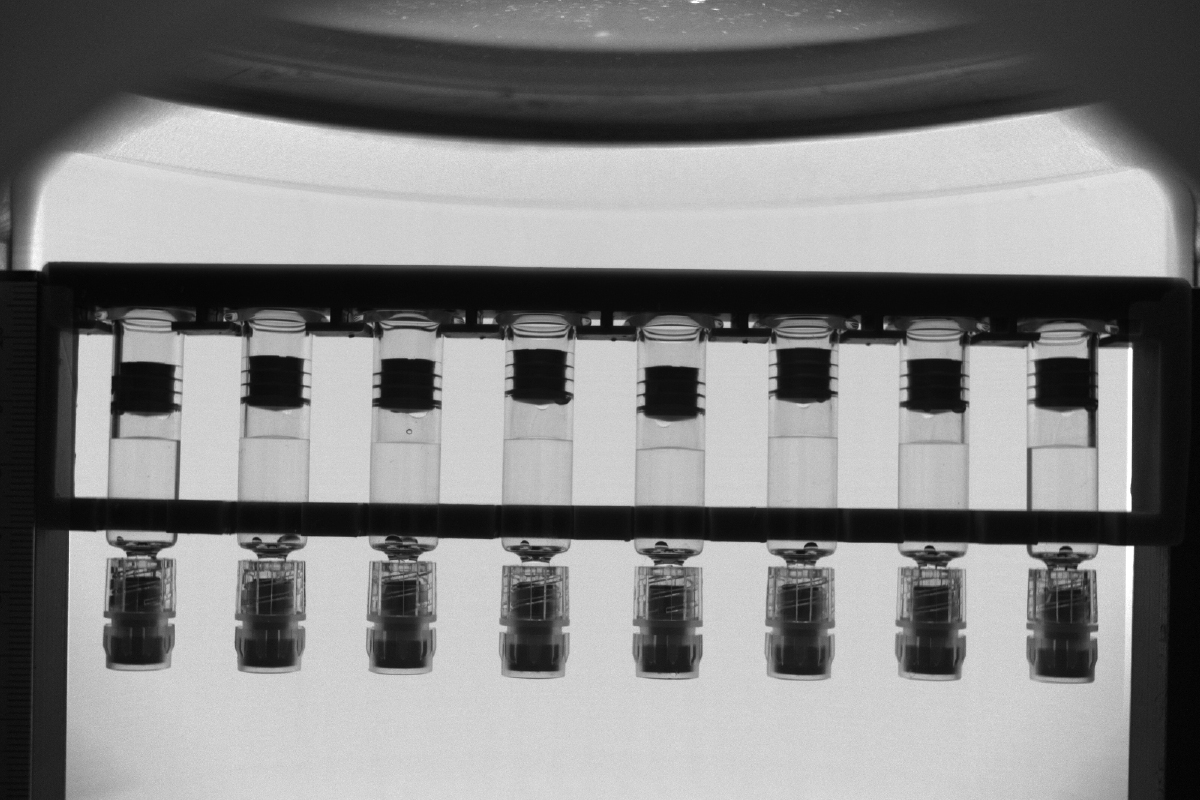
A Deterministic Approach: WILCOs Bombing Station and Visual Inspection
To bridge this gap, WILCO utilizes the Bombing Station for generating transport-like pressure conditions and a camera for visual inspection of the stopper. This dual-method approach moves transport studies from probabilistic "best guesses" to deterministic science.
Controlled Stress via Bombing: We place the primary packaging into a pressure chamber to simulate specific shipping profiles, such as the rapid decompression cycles found in air cargo. While the WILCO bombing station is capable of applying a wide pressure range from 0 to 7 bar abs., transport studies for sensitive components like syringes typically require a much more targeted range. Often, a range of 1 bar ± 500 mbar is sufficient to simulate the environmental shifts encountered during transit- a range that remains strictly within the parameters of the production environment.
Why This Matters for Your Validation Strategy
With the new EU GMP Annex 1 regulatory emphasis on transport and shipping validation, the focus is shifting toward methods that provide clear, quantitative evidence. The Bombing + camera monitored stopper movement workflow offers several strategic advantages:
- Quantitative Data for Annex 1: It provides the empirical evidence required to prove that "transportation and shipping requirements" do not negatively impact the CCS.
- Stopper Characterization: It allows for a deeper understanding of how different stopper coatings (like PTFE) or siliconization levels perform under specific pressure.
- Quantifiable Displacement Data: Using camera-based monitoring allows you to precisely measure the distance of stopper movement. Instead of a simple pass/fail, you gain a detailed understanding of the safety margins of your closure system, which is invaluable during the packaging development and qualification phases.
Annex 1 has raised the bar for how we view the "sterile journey" of a drug product. Transport studies are no longer a peripheral concern; they are a critical component of a robust validation package.
Get more information
At WILCO, we specialize in providing the equipment and the analytical frameworks to ensure your packaging stands up to the pressure. If you are currently refining your transport study protocols, our team can help you implement a testing regime that is both technically sound and fully compliant with the new regulatory expectations.
You want flexible CCI tests in your laboratory?
We are happy to advise you personally
